Be Honest: Did You Think She Was Hot? And More Importantly… Would You Buy Her Outfit?
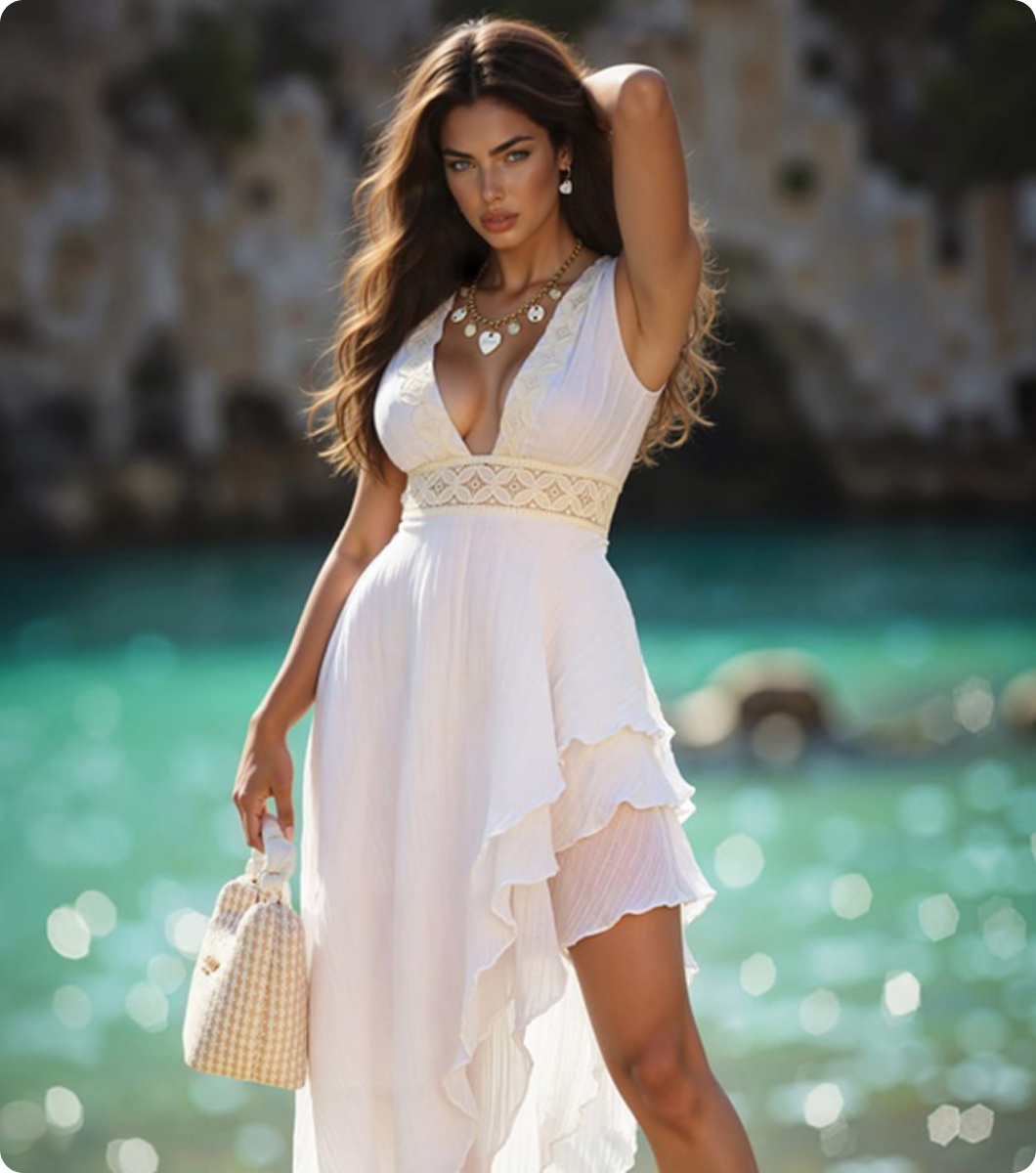
This month, Guess ran a glossy two-page ad in Vogue. Nothing unusual there until readers learned that the statuesque brunette with the perfect jawline wasn’t human. She wasn’t a model at all. She was a digital creation from an AI studio called Seraphinne Vallora.
If you missed the fine print, you’re not alone. The disclaimer “Produced on AI” was easy to gloss over. And Vogue was quick to clarify: this wasn’t editorial, it was just a paid ad placement. Still, the campaign went viral because the star of the spread didn’t technically exist.
The blowback was fast. TikTok, Reddit, and fashion forums lit up with comments like:
“We want to see real women in magazines, not fake ones.”
“Models, photographers, stylists… whose jobs disappear first?”
Critics argued this cheapens the craft of modeling, erases diversity progress, and piles more unrealistic standards on consumers. Plus-size model Felicity Hayward called it “lazy and cheap.” Industry experts warned of a creative labor squeeze. And plenty of readers admitted something darker: they couldn’t tell the difference, and that unsettled them.
If I’m honest, I’d prefer to know with confidence that the person staring back at me in an ad is real. Partly because that’s what I’m used to. My brain knows how to process a cartoon versus a photograph, but when the line blurs and it is designed to fool me, I feel a little duped.
But here’s the thing: if I can’t tell, and this becomes the norm, I’ll adapt. We all will. Advertising evolves, and so do consumers. Some brands might even market themselves on “100% real humans” as a differentiator. But when the bottom line favors pixels over people and no one can tell the difference, the modeling profession may fade away like the summer wind.
If you found out the model in your favorite ad was AI-generated, would you care?